VW’s Three‑Architecture Gamble: how suppliers can win without picking the wrong horse
Volkswagen is simultaneously developing vehicles on MEB+, Rivian’s RV Tech architecture, and XPeng’s CEA platform. For suppliers, betting on the wrong one could cost millions. The solution? Platform‑agnostic deep tech.
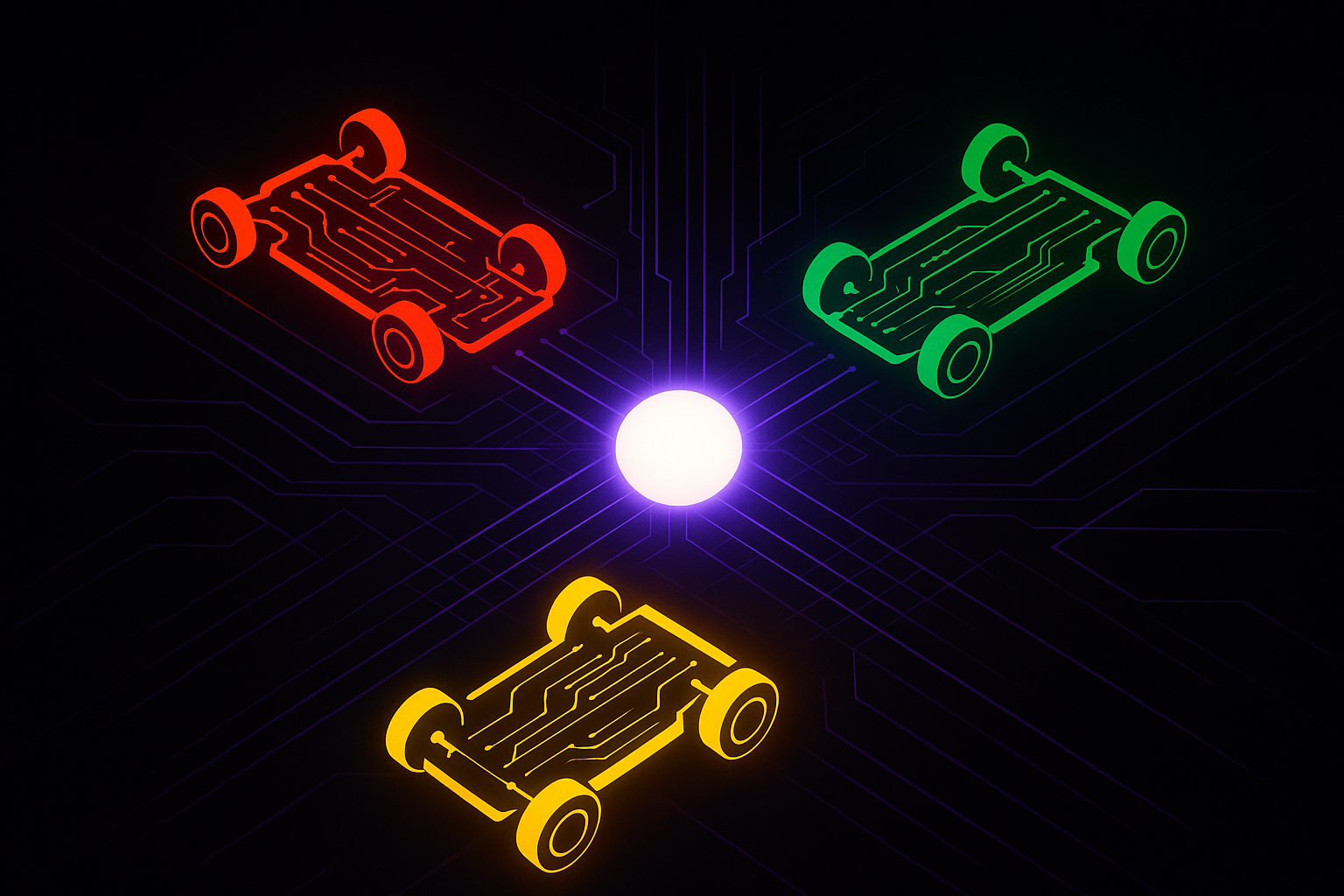
The three architectures – MEB+, Rivian, XPeng – and the platform‑agnostic core
The supplier’s dilemma: three architectures, one supply chain
VW’s strategy is a hedge against uncertainty, but it spreads volume across three very different electronic architectures. Each has its own timeline, core technology, and supplier opportunities.
| Path | Core technology | Timeline | Supplier opportunity |
|---|---|---|---|
| MEB+ | 800V, LFP batteries, evolutionary E/E | 2026–2028 | High‑volume, cost‑optimised components |
| Rivian (RV Tech) | Zonal architecture, SDV backbone, OTA‑ready | 2027+ | Software‑defined vehicle components, HPC integration |
| XPeng (CEA) | Chinese E/E architecture, VLA 2.0 autonomy | 2026 (China) | Cost‑reduced smart driving components |
If you align exclusively with one, you risk being orphaned if that platform loses internal favour or fails to scale. The solution is to follow the example of companies like ZF.
The ZF case study: what “platform agnostic” actually looks like
In 2024, ZF sold its ADAS division. Why? Because being “average” in perception software is a losing game. Instead, ZF doubled down on what it does exceptionally well: the physical interface between vehicle and road.
Today, ZF supplies the complete chassis system to NIO—including brake‑by‑wire, steer‑by‑wire, and vehicle dynamics control. That same hardware works identically on NIO’s NT 3.0 platform, VW’s MEB+, or a future Rivian‑powered Audi. The integration interface is standardised; the value is deep, not wide.
Platform‑agnostic tech pieces that travel well
Your product strategy should mirror ZF’s: identify the “deep tech” components that every architecture needs but that are not the core competency of any single platform. These pieces are easy to integrate across MEB+, Rivian, and XPeng.
| Tech area | Platform‑agnostic component | Why it works |
|---|---|---|
| Vehicle motion | Brake‑by‑wire, steer‑by‑wire, integrated chassis control | Every car needs to stop and turn. Standardised interfaces (AUTOSAR, SOME/IP). |
| Thermal management | Smart thermal valves, heat pump integration | All BEVs need thermal management – the physics don’t change. |
| High‑voltage components | DC‑DC converters, onboard chargers (OBC), PTC heaters | Commodity‑like but mission‑critical; cost and weight optimisation wins everywhere. |
| Sensor hardware | Radar, LiDAR, camera modules (silicon, not perception stack) | VW may develop its own perception software, but they will buy the hardware from specialists. |
| Connectivity & V2X | Telematics control units, 5G modems, V2X antennas | Hardware is largely standard; the software stack above may vary, but the RF front end is a pure hardware play. |
| Cybersecurity hardware | Hardware Security Modules (HSM), secure element chips | Every software‑defined vehicle needs a root of trust – a discrete component that fits any zonal architecture. |
How viable.works helps you make the right bet
Your customers – CTOs and product strategists at Tier 1 suppliers – need to know:
- Which architectures are gaining volume share? (to size the TAM)
- What are the technical specifications of each platform? (to ensure your component meets voltage, bandwidth, and safety levels)
- Who is winning integration contracts? (to understand the competitive landscape)
That’s where viable.works becomes the essential tool. Our OS Comparison and HPC Comparison allow you to:
- Map technical requirements: Understand exactly what processing power, operating system environment, and communication protocols each VW platform requires.
- Identify integration points: Pinpoint where your component can plug in – whether it’s a sensor fusion module connecting to the Rivian zonal gateway or a thermal controller on MEB+.
- Validate platform‑agnostic design: Use our data to ensure your product can meet the specs of all three architectures with minimal modification.
The bottom line for suppliers
VW’s three‑architecture strategy is not a sign of weakness – it’s a hedge against uncertainty. But for suppliers, it means one thing clearly: do not marry a platform. Marry a problem.
- If you solve a problem that every vehicle architecture shares – like ZF solved vehicle dynamics – you will be integrated into whichever platform wins.
- If you build a component that sits at a standardised interface (sensor output, actuator input, power distribution), you are future‑proof.
- If you try to build the “best” ADAS software for VW.OS, you might find yourself orphaned when VW pivots to Rivian’s zonal architecture.
The race is not about which VW platform wins. The race is about which suppliers build the deep, platform‑agnostic tech that every winning platform ultimately needs.
Ready to build platform‑agnostic products?
Let our experts help you navigate the complexity of MEB+, Rivian, and XPeng architectures. Start with the data – explore the OS and HPC comparisons today.